
Last updated October 16, 2026
 Water damage drying
 Fire & smoke cleanup
 Mold remediation
 Storm response
 Sewage cleanup
 Reconstruction
Free visual inspection and a written scope of work before any mitigation begins - photos, moisture readings, and drying logs go in your claim file
The scope we write is the scope we bill. Anything new gets shown to you, in writing, before we touch it.
Get your free estimateThe Complete Guide to Damage Restoration in Los Angeles
In the two weeks following Los Angeles’s 2023 atmospheric river storms, insurance carriers processed more water damage claims across the county than they had in the entire preceding dry season. Read that again. A city defined by drought and sunshine became, almost overnight, a case study in what happens when saturated air collides with aging stucco, hillside clay, and slab foundations built before modern waterproofing existed. Most restoration guides treat every city the same. This one doesn’t. We’re writing this from inside Los Angeles, for Los Angeles homeowners, because restoring a damaged home in Silver Lake is genuinely different from restoring one in Phoenix or Portland.
Quick Answer
Damage restoration in Los Angeles costs between $1,800 and $7,500 for most water-related incidents, with mold remediation typically adding $1,200 to $4,500 depending on square footage and containment requirements. For a deeper look at pricing, see our Damage Restoration Cost Breakdown: The Los Angeles Homeowner’s Reference for 2026. The process follows a set sequence: emergency mitigation, drying and dehumidification, cleaning and antimicrobial treatment, then structural repair. Los Angeles homeowners should expect written pricing before work begins, technicians following IICRC S500 standards, and drying timelines that account for the city’s specific micro-climates.
Restoration work we handle
Table of Contents
- Why Los Angeles Is a Different Kind of Restoration Market
- How LA’s Micro-Climates Change Drying Timelines
- Post-War Stucco, Wood-Frame, and Slab: What Your House Is Made Of
- Expansive Clay and the Structural Damage Multiplier
- How to Read a Restoration Scope of Work
- Why ‘Written Price Before Work Starts’ Actually Protects You
- The Step-by-Step Restoration Process in Los Angeles
- Common Mistakes to Avoid
Why Los Angeles Is a Different Kind of Restoration Market
Los Angeles gets roughly 14 inches of rain in an average year, nearly all of it falling between November and March. That creates a cycle most restoration guides ignore: eight months of bone-dry conditions followed by four months of concentrated moisture. Homes here are built for the dry months. Stucco exteriors, minimal roof overhangs, and slab-on-grade foundations all assume water will arrive gently and leave quickly. When an atmospheric river parks over the San Fernando Valley for five days straight, those assumptions fail all at once.
We’ve seen homes in Los Angeles where a roof leak ran for three days before anyone noticed, simply because the homeowner hadn’t thought about rain in months. Learn to spot problems early with our Damage Restoration Warning Signs: A Los Angeles Homeowner’s Reference Guide. In Phoenix, a roof leak is an event. In Los Angeles, it’s a seasonal surprise that often gets discovered through a ceiling stain in April. The delay between water intrusion and detection is, on average, longer here than in wetter climates, and that delay is what turns a $600 drying job into a $6,000 mold and structural claim. This is the single most important difference between restoration in Los Angeles and restoration anywhere else: the timeline of discovery is stretched by the city’s dry-season mindset.
For a complete breakdown of how water damage is handled in this market, see our Water Damage Restoration in Los Angeles page.
How LA’s Micro-Climates Change Drying Timelines
Los Angeles is not one climate. It’s at least five, and each one changes how a restoration team approaches psychrometric drying (tracking the air’s moisture level so we know when your home is truly dry, not just surface-dry). A coastal home in Santa Monica deals with ambient humidity above 65% for much of the year. A hillside home in Mount Washington gets direct sun that bakes moisture out of the top layer of drywall while trapping it underneath. A Valley home in Woodland Hills might see triple-digit temperatures that accelerate evaporation but also stress drying equipment.
Here’s what this means in practice:
- Coastal zones (Santa Monica, Venice, Playa del Rey): High ambient humidity slows evaporation. Drying times run 20 to 30% longer than the national average, and dehumidifiers run constantly. The risk during drying is secondary condensation on cool surfaces.
- Valley zones (Woodland Hills, Northridge, Studio City): Hot, dry air speeds surface drying but can create a false “dry” reading. Moisture meters will show dry drywall while the stud cavity behind it still holds 25% moisture content. Technicians must check deeper than they would elsewhere.
- Hillside zones (Silver Lake, Echo Park, Mount Washington): Homes on slopes have uneven airflow underneath and around them. Crawlspace humidity varies dramatically from one corner to the next. Drying requires more equipment placement points and longer monitoring.
- Inland zones (Pasadena, Glendale, Burbank): Temperatures swing more widely between day and night, which causes materials to expand and contract during drying. This can loosen joints and pull moisture out of hidden cavities at unpredictable times.
The IICRC S500 standard, which governs professional water damage restoration, requires technicians to document ambient conditions and adjust equipment load-outs based on the specific environment. In Los Angeles, that adjustment is not optional. A drying plan built for a generic “West Coast” climate will miss the mark in at least half of the city’s neighborhoods. When we deploy Dri-Eaz and Phoenix equipment in Los Angeles, the setup in a Playa del Rey condo looks completely different from the setup in a Woodland Hills single-family home, even for the same category of water loss.
Post-War Stucco, Wood-Frame, and Slab: What Your House Is Made Of
Most Los Angeles housing stock was built between 1945 and 1975. That’s not a random era. It’s the post-war building boom that prioritized speed and cost over moisture management. The typical construction profile in neighborhoods like Culver City, Silver Lake, and the western San Fernando Valley is wood-frame with stucco cladding over a concrete slab foundation. This combination traps moisture in ways that newer builds don’t.
Stucco is porous. It absorbs water slowly and releases it even more slowly. When a stucco wall gets wet from a plumbing leak inside the wall cavity, the stucco itself becomes a moisture reservoir. You can dry the interior drywall completely and still have a stucco layer holding 18% moisture content, which will re-wet the wall within days. We’ve handled repeat calls in Culver City where a homeowner replaced drywall after a leak, only to see staining return three weeks later because the stucco was never dried properly.
Wood-frame construction from this era often lacks the moisture barriers that became standard in the 1990s and 2000s. No house wrap, minimal flashing around windows, and no capillary break between the slab and the sill plate. When water finds its way into a wall cavity, it travels. In a modern home, that travel is limited. In a 1950s Los Angeles home, water can move horizontally through wall cavities for feet before gravity pulls it out somewhere unexpected.
Slab foundations create a different problem. Water that penetrates below the slab has nowhere to go. It sits. It wicks up through the concrete. It creates a persistent moisture condition that mold loves. This is why a “small” plumbing leak under a Los Angeles slab foundation is rarely small by the time it’s discovered. The concrete itself becomes a moisture delivery system. For more on how this affects Water Damage Repair in Los Angeles, we cover the structural side in detail on that page.
Expansive Clay and the Structural Damage Multiplier
Here’s something most restoration guides skip entirely: the soil under your Los Angeles home can turn a contained water event into a structural damage claim. Large portions of the city, particularly hillside lots in Silver Lake, Echo Park, Eagle Rock, and parts of the Hollywood Hills, sit on expansive clay soil. This is the same soil type that causes foundation problems in Texas and Colorado, and it behaves the same way here.
Expansive clay swells when wet and shrinks when dry. A plumbing leak that saturates the soil under one corner of your slab foundation causes that corner to lift, sometimes by a quarter inch or more. When the soil dries, the corner settles again. This differential movement cracks slab foundations, pops tiles, and separates walls from ceilings. The damage shows up as cosmetic cracks at first, but the underlying issue is structural.
We’ve seen a water heater failure in an Eagle Rock garage turn into a $40,000 foundation repair because the leak ran for weeks before anyone noticed. The water traveled through the slab, saturated the clay beneath one section of the foundation, and created enough differential movement to crack the slab in three places. The water damage restoration was straightforward. The foundation repair was not.
This is why a proper restoration assessment in Los Angeles includes checking for signs of soil-related movement: doors that suddenly stick, new cracks that appear within 30 days of a water event, or floors that feel uneven. If your restoration contractor doesn’t know to look for these signs, they’ll miss the most expensive part of the damage. The Wendell Restoration Los Angeles home page outlines our approach to comprehensive assessments in earthquake country, where structural awareness isn’t optional.
How to Read a Restoration Scope of Work
When you hire a restoration company in Los Angeles, you should receive a written scope of work before any equipment is placed. Make sure you also understand the Damage Restoration Permits, Codes & Inspections in CA: What You Need to Know. This document tells you exactly what will be done, what standards will be followed, and what the job will cost. But scopes are written in trade language that most homeowners can’t evaluate. Here’s how to read one like you know what you’re looking at.
- Look for the standard reference. A legitimate water restoration scope will reference IICRC S500, which is the professional standard for water damage restoration. If the scope doesn’t cite a standard, ask why. IICRC certification isn’t a formality. It’s the difference between a documented, defensible drying process and someone guessing.
- Check the drying goals. The scope should specify target moisture content for each affected material: drywall, studs, subfloor, concrete. RIA guidelines recommend returning wood to its dry standard (usually 8-12% moisture content depending on the region). “Dry to the touch” is not a drying goal.
- Review the equipment list. The scope should list specific equipment: the number of air movers, dehumidifiers, and any specialty drying equipment. Brands like Dri-Eaz, Phoenix, and XPOWER indicate commercial-grade equipment, not rental shop units. If the scope says “drying equipment as needed,” that’s a red flag.
- Confirm the monitoring schedule. IICRC S500 requires daily moisture readings during the drying process. The scope should specify that readings will be taken daily and documented. If there’s no monitoring schedule, there’s no way to verify the drying was done correctly.
- Check the antimicrobial application protocol. Any category 2 or 3 water loss (gray or black water) requires antimicrobial treatment. The scope should name the specific product and where it will be applied. “Sanitized” without product names is vague enough to mean anything.
We provide a written scope of work on every job we do in Los Angeles because it’s the only way a homeowner can verify that the work was done to standard. If a contractor won’t put the scope in writing before starting, the scope isn’t the problem. The contractor is. For mold-specific projects, our Mold Remediation in Los Angeles page walks through what a compliant mold scope should include under IICRC S520.
Why ‘Written Price Before Work Starts’ Actually Protects You
Verbal estimates from unlicensed contractors are the single most common financial trap in Los Angeles restoration. Here’s how the scenario plays out: a contractor arrives, looks at the damage, and says “this should run around $2,500.” They start work. The drying takes longer than expected. The equipment count doubles. The final invoice is $6,800, and the contractor claims the additional cost was unavoidable. The homeowner has no written agreement that specified a price, so they have no leverage.
A written price before work starts changes the entire dynamic. It forces the contractor to actually assess the damage, calculate the equipment needs, and commit to a number. If the contractor’s math is wrong, that’s the contractor’s problem, not yours. The price on the quote is the price you pay. If additional work becomes necessary during the job, that requires a change order, which is also in writing, and which you approve before the additional work happens.
This matters more in Los Angeles than in most cities because the unlicensed contractor ecosystem here is substantial. The Contractors State License Board investigates thousands of unlicensed contracting complaints in Los Angeles County each year, and restoration work is a frequent target. Unlicensed operators know that a homeowner with water in their living room and a damaged ceiling is not doing comparison shopping. They rely on urgency to skip the paperwork. Don’t let them.
Wendell Restoration Los Angeles puts the price in writing before any work starts on every single job, and every repair is backed by our 365-Day Done Right Promise: if it’s not done right, we make it right, stated in writing on every job. We also stand behind a free second visit if a repair fails. That’s our standard, and we’ve held it since 2006 as part of the Relay Home Co. family.
The Step-by-Step Restoration Process in Los Angeles
Here’s what a professional restoration project actually looks like when it’s done correctly in Los Angeles. This sequence follows IICRC and RIA standards and applies to water damage, which is the most common restoration trigger in the city.
Step 1: Emergency Contact and Assessment
The process starts with a call. At Wendell, a live person answers 24/7, because water damage doesn’t keep business hours. During the call, we ask targeted questions: Is water actively flowing? Where is it coming from? What rooms are affected? This intake determines the urgency of the response.
Within hours, not days, a technician arrives with a live arrival time you can track. The assessment includes moisture mapping: where the water is, how far it’s traveled, and what materials are affected. We check for hidden water in wall cavities, under cabinets, and beneath flooring. The assessment determines the category of water (clean, gray, or black), which dictates the entire protocol.
Step 2: Water Extraction
Standing water is extracted using commercial extraction equipment. This is the fastest way to remove the majority of the water. The goal is to get visible water out within hours of arrival, which prevents further migration and reduces drying time.
Step 3: Equipment Placement and Drying
Air movers and dehumidifiers are placed according to a drying plan that accounts for the specific building materials and the Los Angeles micro-climate where the home sits. Psychrometric monitoring tracks temperature, humidity, and moisture content daily. Drying typically takes 3 to 7 days for most residential losses in Los Angeles, with coastal homes on the longer end of that range.
Step 4: Antimicrobial Treatment
If the water was gray or black water, or if mold is present, antimicrobial treatment is applied to affected surfaces. This is not surface cleaning. It’s a protocol that addresses microbial growth at the source and prevents recurrence. Under IFA standards, the specific products and application areas are documented.
Step 5: Structural Repair and Reconstruction
Once the affected areas are dry, repair work begins. This might be drywall replacement, flooring installation, baseboard repair, or cabinet replacement. The repair phase is scoped separately from mitigation, with its own written price and its own timeline. We don’t start repairs until we’ve documented that the drying is complete.
Step 6: Documentation and Verification
Every step is documented. Moisture readings, photos, equipment placement, and product applications. For insurance claims, we provide photo documentation and coordinate directly with your adjuster. You get before-and-after photos by text so you can see exactly what was done. If it’s not done right, the 365-Day Done Right Promise covers it.
Common Mistakes to Avoid
- Waiting to call because it’s “just a small leak.” In Los Angeles, small leaks become big problems faster than people expect. A leak that runs under a slab foundation in Eagle Rock for even two weeks can create structural movement in expansive clay soil. Call early.
- Hiring based on the cheapest phone estimate. An unlicensed contractor with a low verbal quote is not a deal. It’s a down payment on a larger bill later. Get the scope and the price in writing before work starts.
- Turning off drying equipment to save electricity. Restoration drying equipment runs 24/7 for a reason. Interrupting the drying cycle extends the timeline and increases the risk of mold. In Los Angeles’s coastal zones, interrupted drying also allows ambient humidity to re-enter the damp materials.
- Painting over water stains. A dried water stain is not a repaired water problem. Painting over it without treating the underlying moisture creates a sealed environment for mold growth. We see this constantly in post-war stucco homes where moisture lingers in the wall cavity.
- Assuming insurance covers everything. Insurance policies in Los Angeles vary widely on restoration coverage, particularly for mold and for water damage from slow leaks. Know what your policy covers before the emergency, and get photo documentation of all damage.
- Skipping the moisture verification before repairs. Repairs should never begin until moisture readings confirm the affected materials are at their dry standard. If a contractor starts hanging drywall before verifying dryness, they’re building a mold problem into the wall.
- Ignoring the soil factor. In hillside Los Angeles neighborhoods, water damage and foundation movement often occur together. If you notice new cracks or sticking doors after a water event, mention it during the assessment. The restoration scope should account for it.
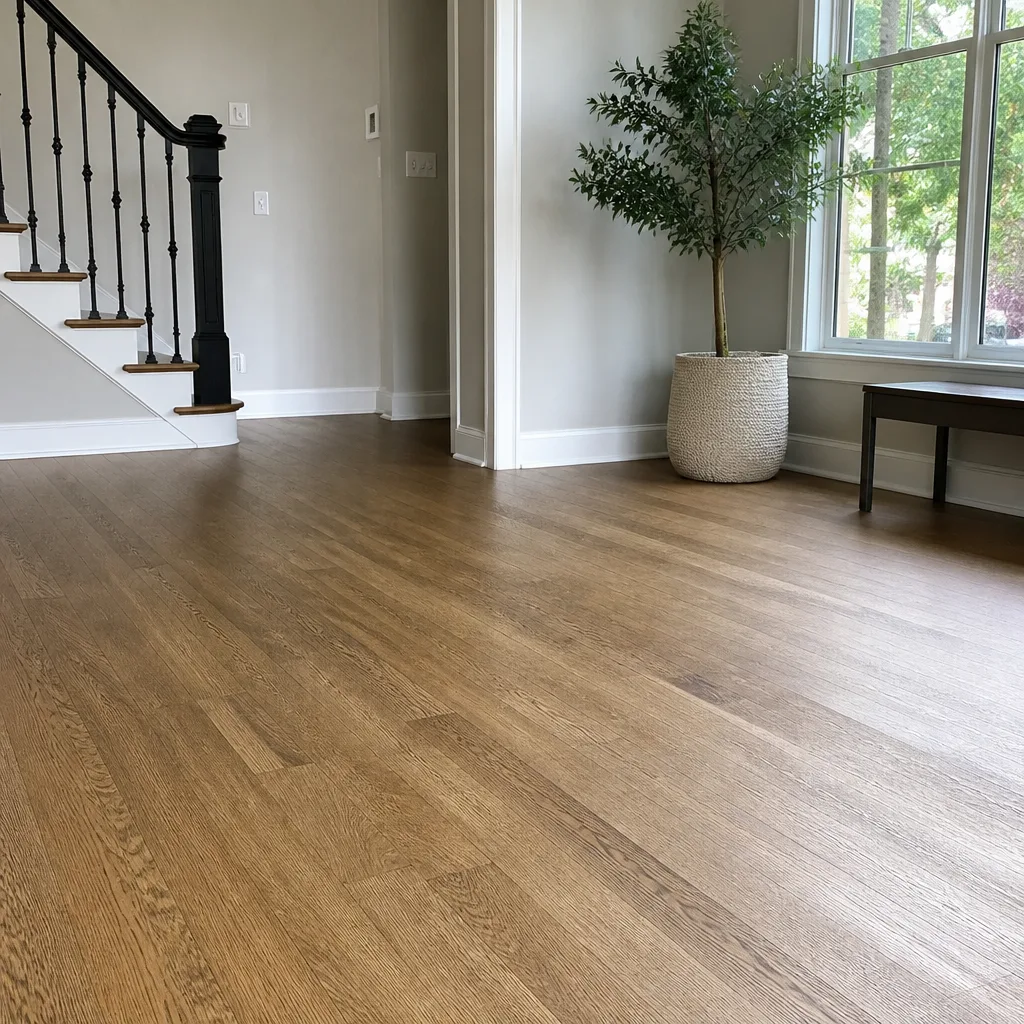
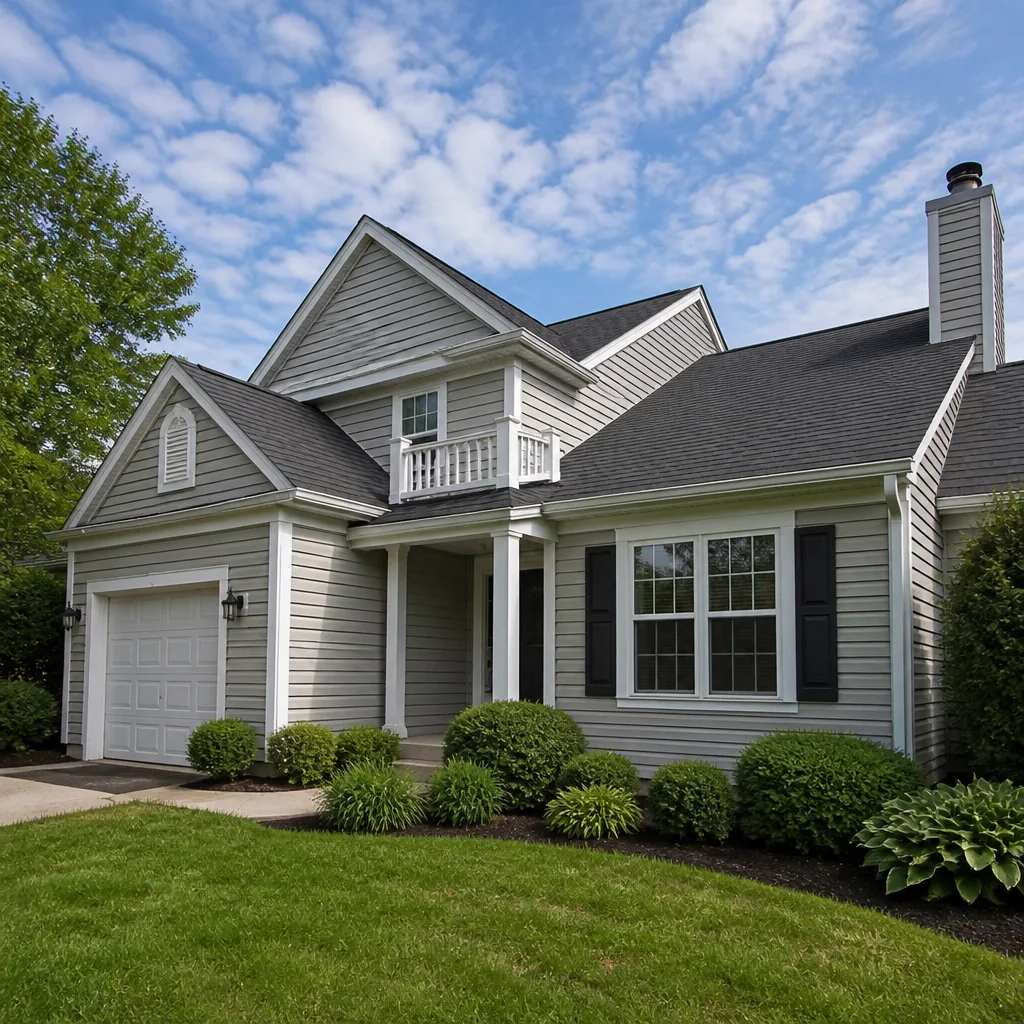
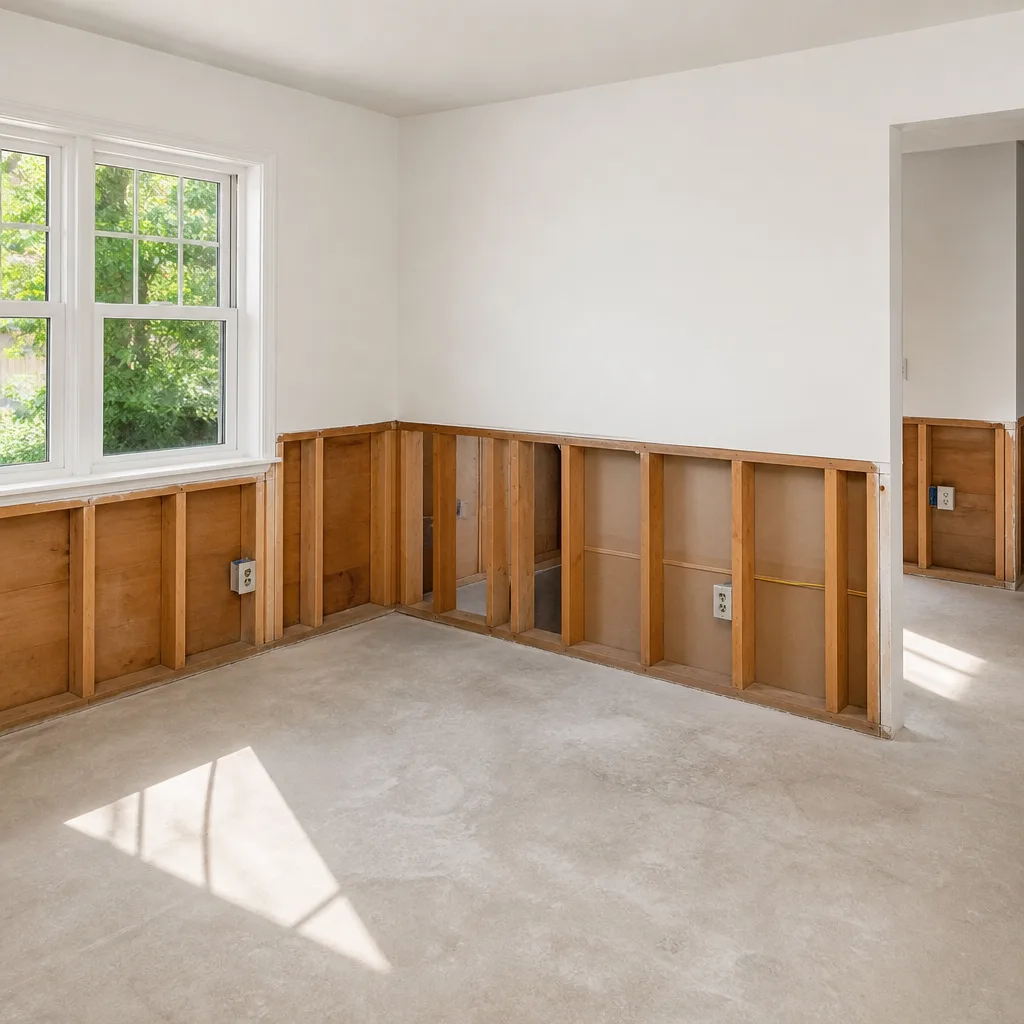
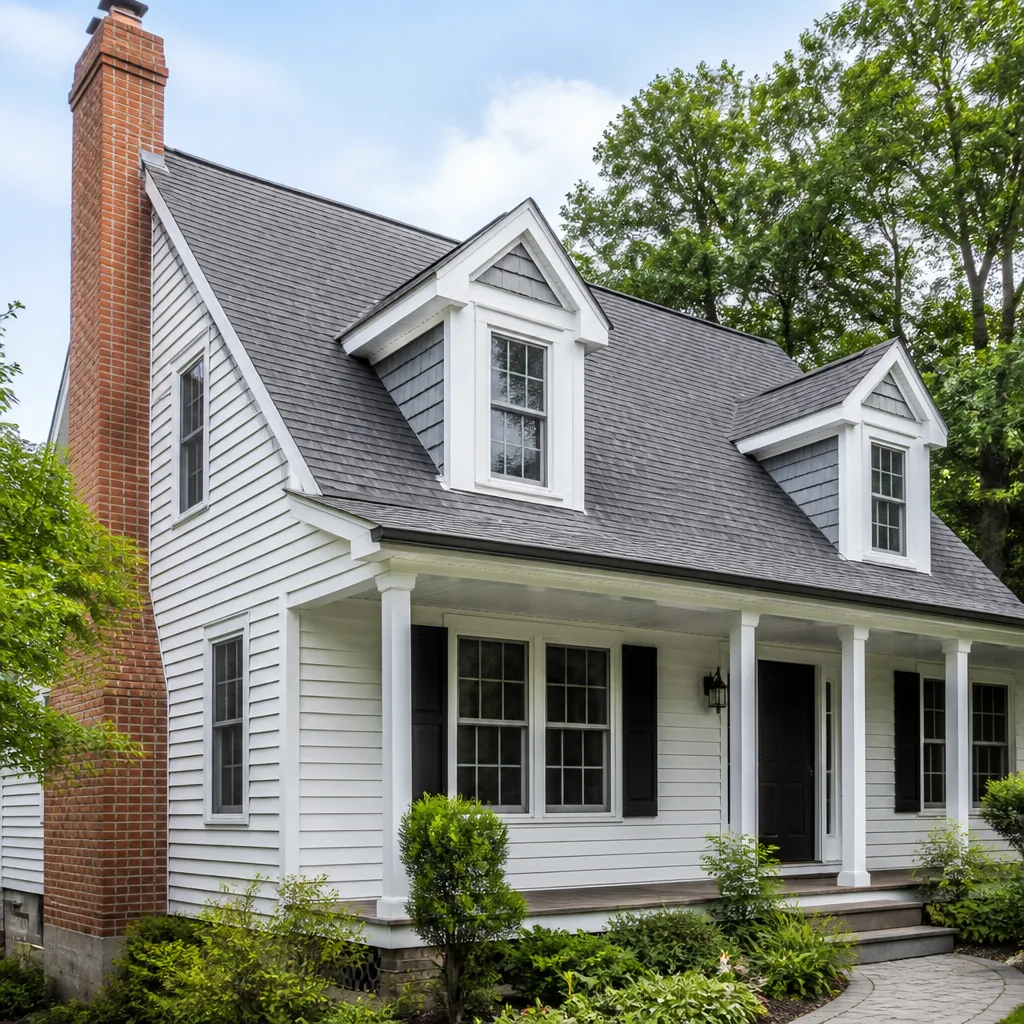
See the difference
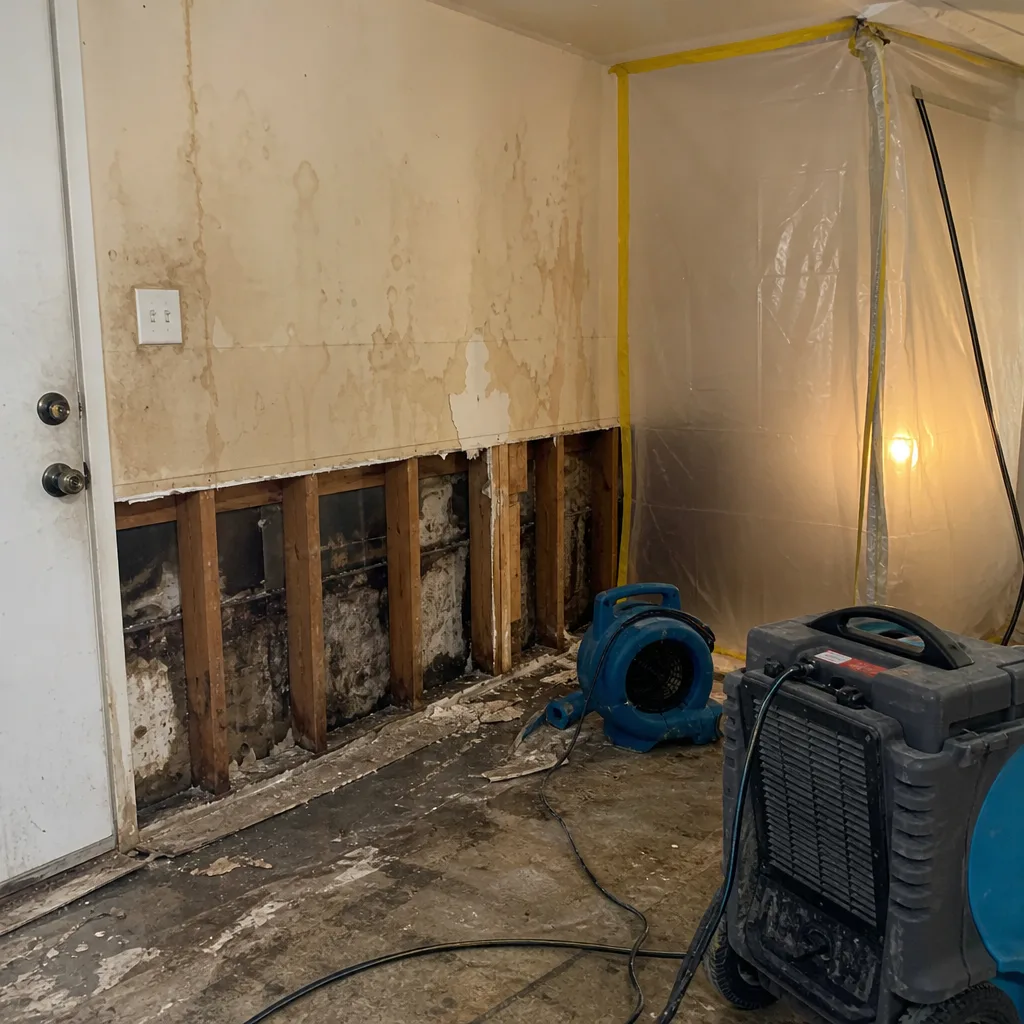 Before
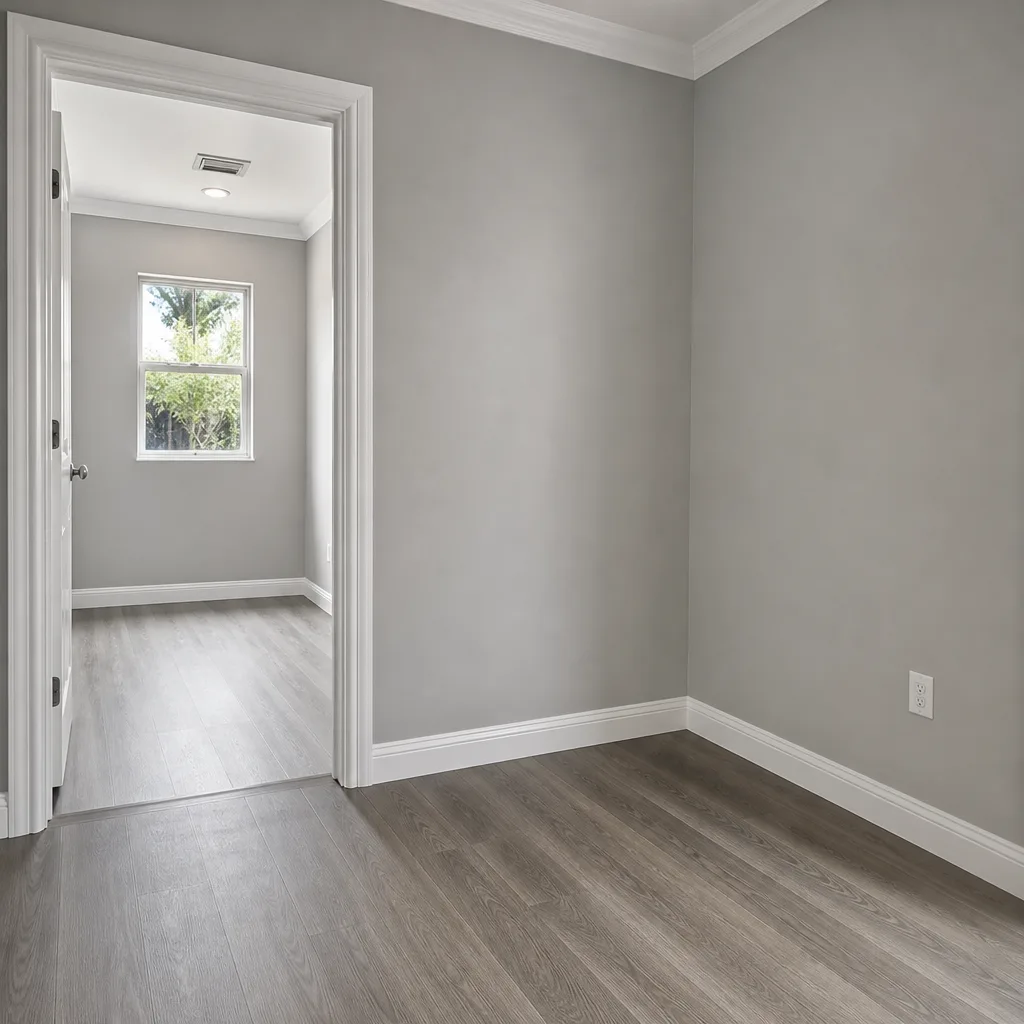 After
After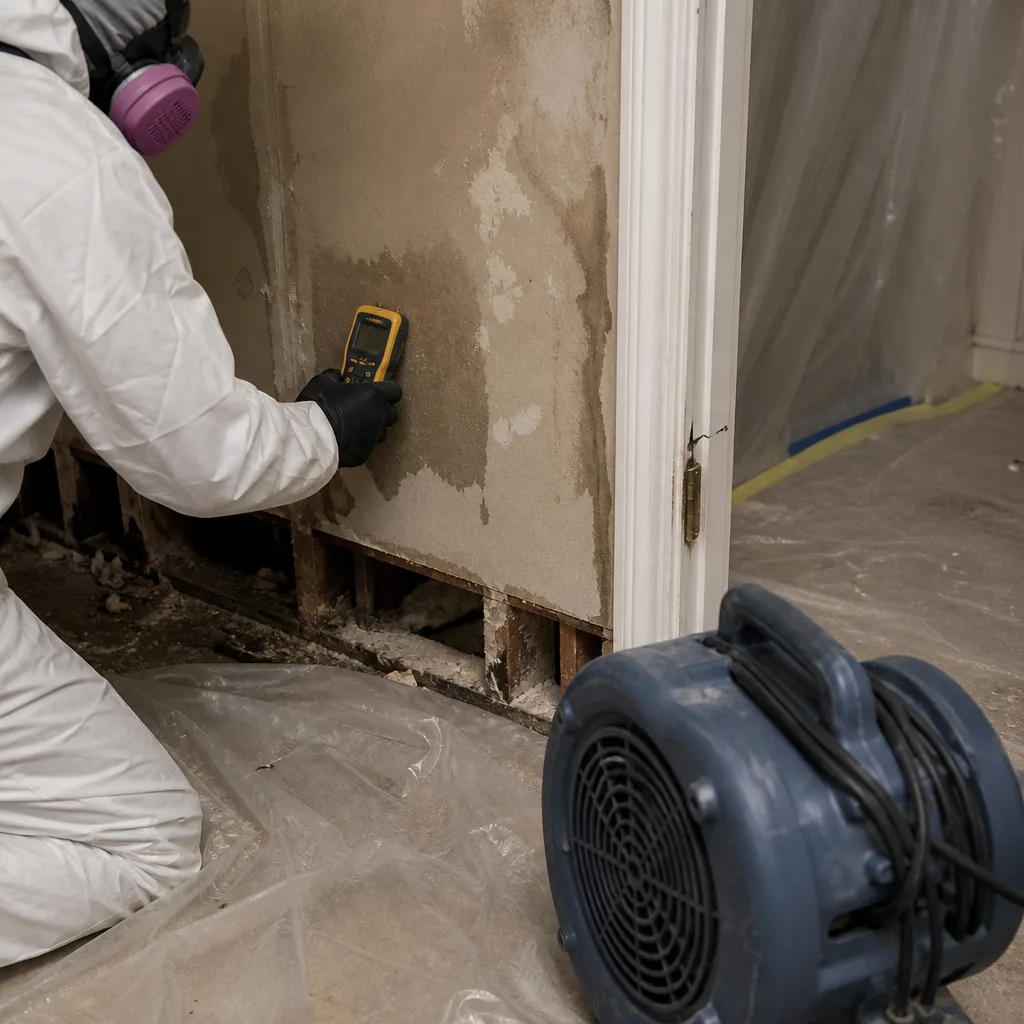 Before
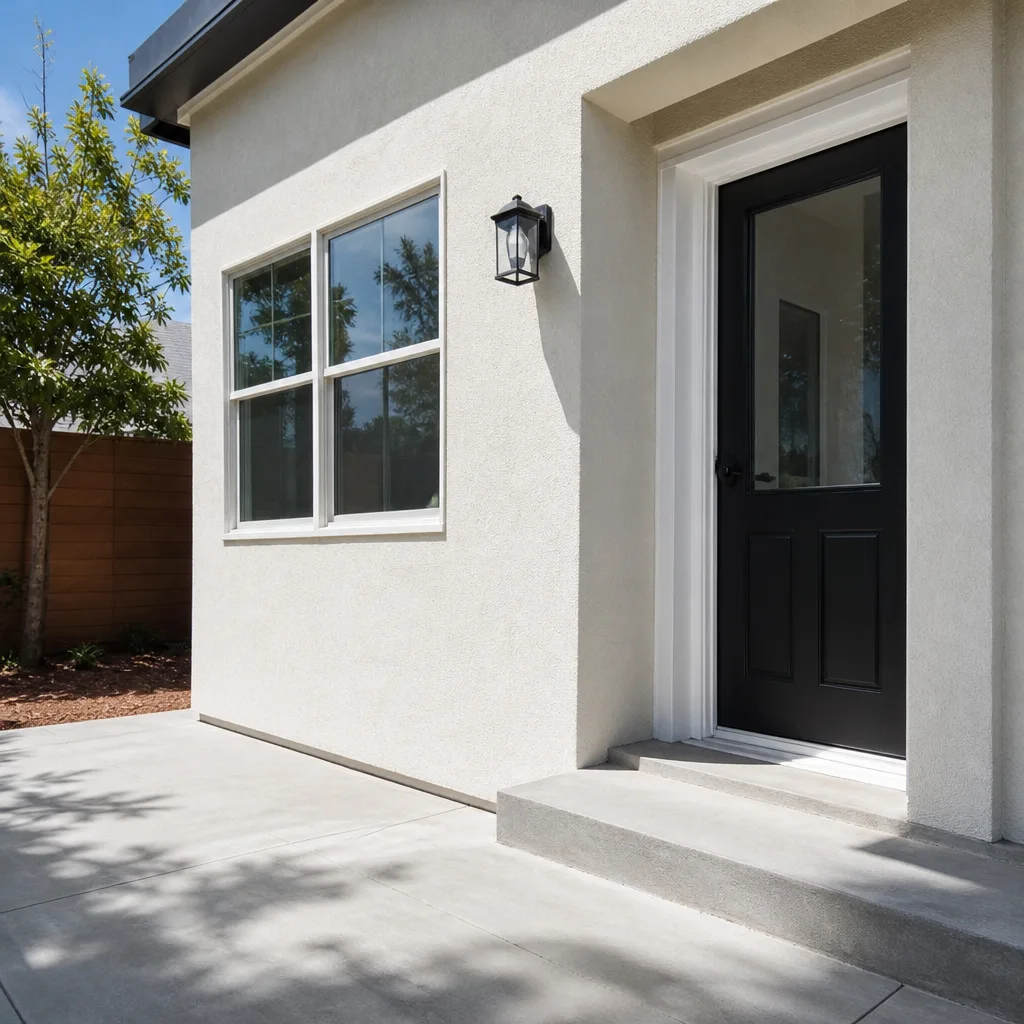 After
After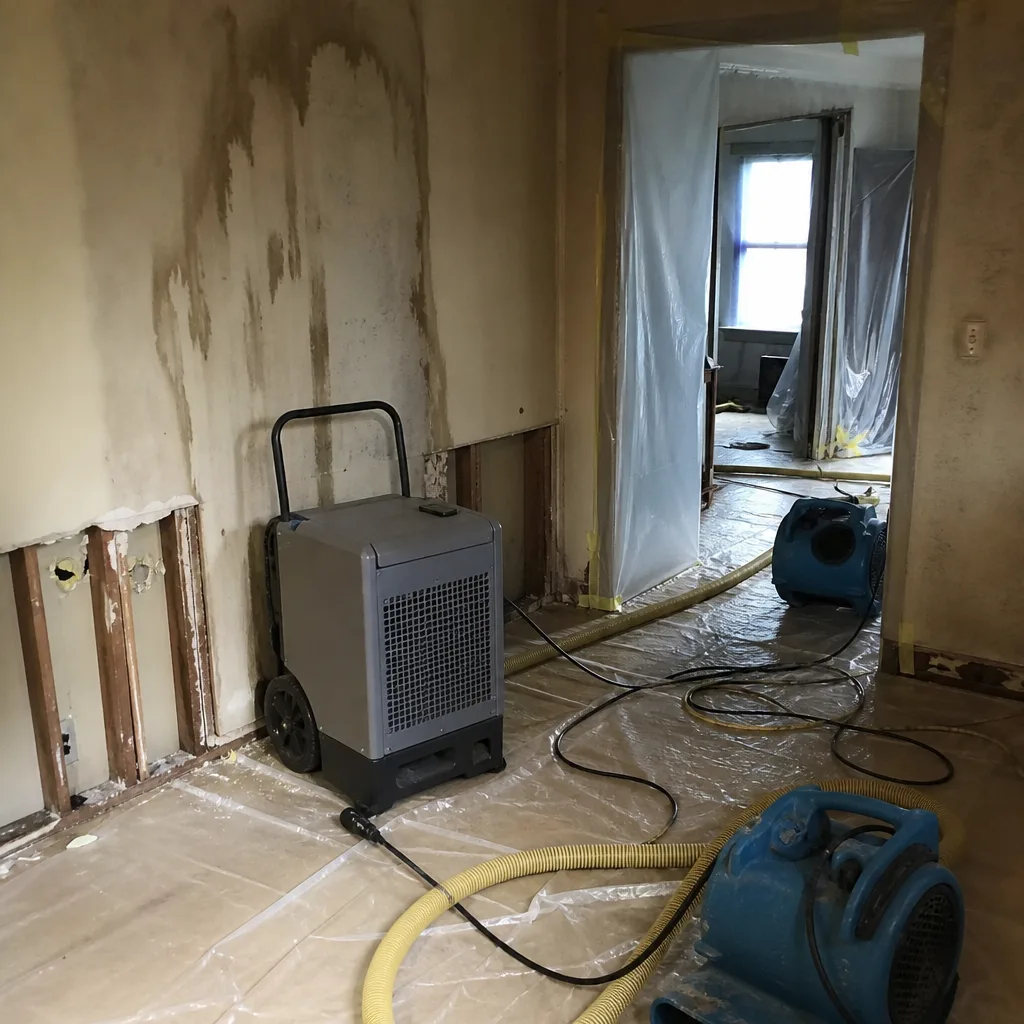 Before
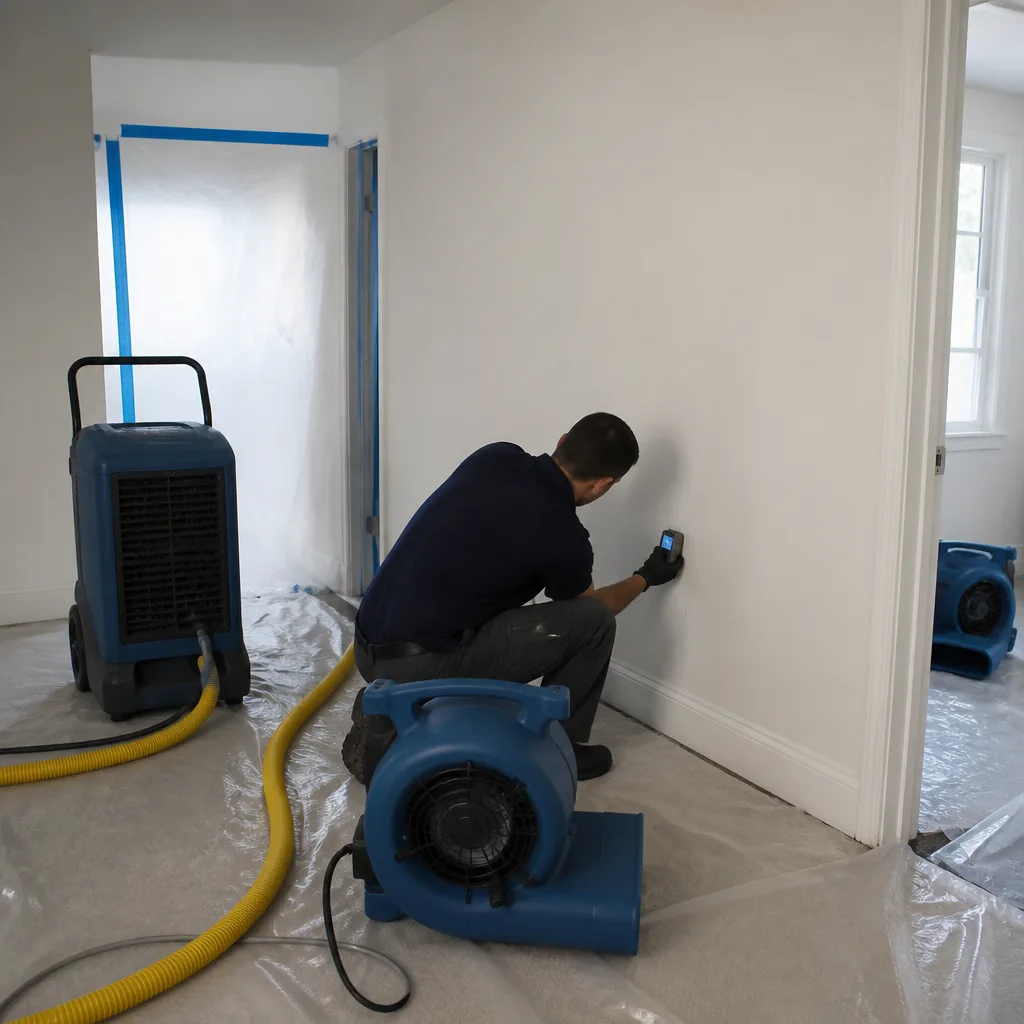 After
AfterWhen to Call a Professional
Call a professional before you do anything else if water has been standing for more than 24 hours, if the water source is a sewage line or toilet overflow, if you see visible mold growth larger than a few square feet, or if water has penetrated wall cavities or under flooring. These are the conditions where DIY approaches fail and the damage compounds quickly. Also call if you’re in a hillside Los Angeles neighborhood where the water may have reached the soil beneath your foundation. Wendell Restoration Los Angeles offers free estimates in Los Angeles, call (213) 349-9500 and a live person will answer.
Frequently Asked Questions
Water damage restoration in Los Angeles typically costs between $1,800 and $7,500, with the average residential water loss running around $3,500. Mold remediation adds $1,200 to $4,500 depending on the affected square footage and whether containment is required. The final price depends on the category of water, the affected materials, and how quickly the water was addressed. Call (213) 349-9500 for a written estimate before any work begins.
Most residential water damage restoration in Los Angeles takes 5 to 10 days from initial assessment through completed drying, with repairs adding another 1 to 3 weeks depending on scope. Coastal homes in Santa Monica or Playa del Rey often run longer on the drying phase due to higher ambient humidity. Hillside homes may require additional time if structural assessment is needed.
Most homeowner policies in Los Angeles cover sudden and accidental water damage, like a burst pipe or water heater failure, but exclude gradual damage from slow leaks or long-term seepage. Mold coverage varies significantly by policy and often has caps. We provide photo documentation on every job and coordinate directly with your adjuster to support your claim.
Household fans and open windows will dry the surface, but they won’t remove water from wall cavities, subflooring, or concrete slabs. Professional drying uses commercial air movers and dehumidifiers to create a controlled drying environment and verify dryness with moisture meters. In Los Angeles post-war stucco homes, surface drying alone leaves trapped moisture that causes recurring problems.
Ask for written confirmation that the work follows IICRC S500 standards, request a written scope of work before any equipment is placed, and confirm that daily moisture readings will be documented. Legitimate restoration companies work to IICRC, RIA, or IFA standards and have no problem stating so in writing. If the answer is vague, get another company.
Restoration refers to the mitigation phase: extraction, drying, dehumidification, and antimicrobial treatment. Repair refers to the reconstruction phase: replacing drywall, flooring, baseboards, and other affected materials. Most Los Angeles restoration projects include both phases, and they should be scoped and priced separately. Call (213) 349-9500 for an exact quote on either phase; estimates are free.
The Bottom Line
Damage restoration in Los Angeles is not the same as damage restoration anywhere else. The city’s dry-season mindset delays water damage detection. Its micro-climates change drying timelines. Its post-war stucco and slab construction traps moisture. Its expansive hillside clay turns water events into structural claims. The process works when it’s done to standard: written scope, professional equipment, daily monitoring, verified dryness, documented repairs. Get the price in writing before work starts. Get the guarantee in writing. Get a live person on the phone. If you’re facing damage in Los Angeles, call (213) 349-9500 and we’ll answer.
Written by Blake Sorensen, Owner at Wendell Restoration Los Angeles, serving Los Angeles since 2006.