
Last updated October 16, 2026
 Water damage drying
 Fire & smoke cleanup
 Mold remediation
 Storm response
 Sewage cleanup
 Reconstruction
Free visual inspection and a written scope of work before any mitigation begins - photos, moisture readings, and drying logs go in your claim file
The scope we write is the scope we bill. Anything new gets shown to you, in writing, before we touch it.
Get your free estimateDamage Restoration Cost Breakdown: The Los Angeles Homeowner’s Reference for 2026
Two homeowners in Los Angeles can stare at nearly identical water damage, a soaked 400-square-foot living room from a failed water heater, and walk away with estimates of $4,200 and $11,800. Both contractors were technically defensible. One counted three drying days. The other counted six. One classified the water as Category 1. The other pushed it to Category 2 because the heater had been leaking for two days before anyone noticed. That seven-thousand-dollar spread wasn’t fraud. It was the difference between how two companies read the same IICRC category and class tables, and how aggressively each one billed for drying equipment. This guide breaks Los Angeles restoration pricing down to the line item, so when you read an estimate, you’ll know exactly what you’re paying for, what’s fair, and what deserves a second opinion. For Damage Restoration Warning Signs: A Los Angeles Homeowner’s Reference Guide, see our companion post.
Quick Answer
Water damage restoration in Los Angeles typically costs between $3.50 and $8.50 per square foot in 2026, which puts a 400-square-foot single-room job between $1,400 and $3,400 for extraction and drying, before any rebuild. Full restoration, including drywall replacement, flooring, and paint, runs $8,000 to $25,000 for a typical room-and-hallway event. Mold remediation adds $2,000 to $6,500 per affected area, depending on containment requirements and source location. The biggest cost variables are the IICRC water category, the drying day count, and whether your contractor’s estimate includes rebuild or stops at mitigation.
Restoration work we handle
Table of Contents
- The Real Cost Drivers: What Actually Moves the Number
- IICRC Water Categories and Classes: The Price Floor You Can’t See
- The Drying Day Multiplier: Why Days on the Machine Matter More Than Square Feet
- Los Angeles Labor Costs: Union Zones, Permits, and Pre-1980 Hidden Fees
- Antimicrobial Treatment: What It Costs and When It’s Legitimate
- How to Read a Xactimate Estimate: Catching Double-Billing Before You Sign
- Mold Remediation: Bundled or Billed Separately, and Why It Matters
- Common Mistakes to Avoid
- When to Call a Professional
- Frequently Asked Questions
The Real Cost Drivers: What Actually Moves the Number
Most Los Angeles homeowners get pricing from a Google search or a quick phone call, and what they hear sounds simple: three to eight dollars per square foot. That range is almost useless. Here’s what actually moves a restoration estimate in Los Angeles, line by line.
Labor tier. Restoration techs in LA fall into three rough bands. Day-labor crews pulled from construction staffing run $35 to $50 per hour and may not carry IICRC certification. Mid-tier restoration companies with certified techs bill $65 to $95 per hour. High-end commercial-grade firms, the ones that handle hotel and office tower losses, bill $110 to $150 per hour and often send a project manager who bills separately. The per-square-foot number you were quoted is just labor, equipment, and margin compressed into a single figure. Ask your contractor to unbundle it.
Material removal complexity. Pulling wet drywall in an open living room is fast. Pulling wet drywall behind a built-in bookcase, inside a closet with shelving, or around custom millwork is slow. Every obstruction adds labor hours. Los Angeles homes built before 1980 throw another variable into the mix: asbestos. Vinyl sheet flooring, popcorn ceiling texture, and drywall compound from that era frequently contain asbestos, and any removal triggers testing, containment, and disposal surcharges that can add $1,500 to $4,000 to a job. A contractor who skips testing is cutting corners, and you’ll pay for it in liability if airborne fibers become an issue.
Drying day count. This is the quiet killer. More on it below, but know this now: every extra day of drying equipment is a line item, and a contractor who runs fans for six days instead of three has doubled that portion of your bill. In our experience in Los Angeles, the difference between a tight three-day dry and a loose six-day dry on the same room is typically $900 to $1,800.
Mold scope. If mold is visible or suspected, the job changes. Mold remediation requires containment barriers, negative air pressure, HEPA filtration, and antimicrobial treatment. A water job that discovers mold mid-scope can jump 40 to 60 percent in final price. We cover this separately below, because how a contractor bundles or separates mold from water restoration is one of the most common places Los Angeles homeowners get oversold.
Learn more about how we handle these variables on our Water Damage Restoration in Los Angeles page.
IICRC Water Categories and Classes: The Price Floor You Can’t See
The IICRC, the Institute of Inspection, Cleaning and Restoration Certification, sets the standards most legitimate Los Angeles restoration companies follow. Their water categorization system is not bureaucratic trivia. It sets the price floor for your job before a single fan gets plugged in.
Category 1: Clean water. Water from a supply line, a failed water heater tank, or an overflowing sink with no contaminants. This is the cheapest category to dry. No special disposal required, no antimicrobial treatment mandated, and drying can usually start immediately after extraction. Category 1 jobs in Los Angeles run at the low end of the per-square-foot range.
Category 2: Gray water. Water that contains some contamination: washing machine discharge, dishwasher overflow, or water from a toilet with urine but no feces. Category 2 requires more aggressive drying, and antimicrobial treatment is standard practice, not optional. This bumps the price up meaningfully because the affected drywall and carpet often need removal rather than in-place drying, and the debris requires special handling.
Category 3: Black water. Sewage, floodwater from outside, toilet backup with feces, or any Category 1 or 2 water left standing for more than 72 hours. Category 3 is a full remediation job. All affected porous materials, carpet, pad, drywall, insulation are removed and disposed of. Antimicrobial treatment is required. Workers wear full PPE. The per-square-foot price for Category 3 in Los Angeles is often double or triple the Category 1 price.
Here’s the part most guides skip: you can identify the category yourself before any contractor walks in. Trace the water source. If it came from a pipe that feeds clean water, it’s Category 1 the moment it hits your floor. If it sat for more than three days, it has degraded to Category 2 or 3 regardless of source. If it came through a slab foundation, which is common in older Los Angeles neighborhoods like Echo Park and Highland Park, contamination from soil makes it Category 2 at minimum. Knowing this before a contractor tells you gives you leverage. If a tech tries to upgrade a fresh supply-line leak to Category 3, you’ll know to ask why.
Classes are the second half of the equation. Class 1 means a small area, low porosity materials, minimal water absorption. Class 4 means deep saturation in hardwood, plaster, or masonry, requiring specialty drying like the Injectidry panel systems that force air into wall cavities. Each step up in class adds drying days and equipment count, which adds cost. A Class 1 water event might dry in two days with three air movers. A Class 4 event might need five days, a desiccant dehumidifier, and ten air movers. Same square footage. Very different invoice.
The Drying Day Multiplier: Why Days on the Machine Matter More Than Square Feet
Here is the single most important cost concept in Los Angeles restoration, and almost no one explains it clearly. Your estimate is not priced by square foot. It’s priced by equipment, per day, for as many days as the contractor decides the job needs.
An air mover, the high-velocity fan that blows across wet surfaces, bills at $25 to $40 per day in most LA estimates. A dehumidifier, the unit that pulls moisture from the air, bills at $75 to $200 per day depending on size. A standard 400-square-foot living room water loss might require six air movers and two dehumidifiers. On a three-day dry, that’s roughly $900 to $1,300 in equipment line items. On a five-day dry, it’s $1,500 to $2,200. On a seven-day dry, it’s $2,100 to $3,100. That’s the drying day multiplier, and it’s the largest single lever a contractor pulls to move your price up or down.
This is also where the honest companies separate themselves. A legitimate restoration company in Los Angeles uses psychrometric logging, which is the practice of measuring the air’s moisture content, temperature, and humidity daily to determine when the structure has reached its dry standard. Think of it as a moisture weather report for the inside of your walls. When the daily readings show the wood and drywall have hit their target moisture content, usually 10 to 16 percent, the equipment comes off. The log is the proof.
What you should ask for: a daily moisture reading, written down, with the target stated before drying starts. If a contractor can’t or won’t produce a psychrometric log, they have no defensible reason to run equipment an extra three days. We dry under IICRC protocol and log every day, because the log is what justifies the equipment line items, and you should see it before you pay for it. Brands like Dri-Eaz, Phoenix, and B-Air are the industry standard for this gear, and you’ll see their names on equipment if the company is running commercial-grade drying systems rather than big-box store fans.
One more Los Angeles-specific note: coastal neighborhoods like Marina del Rey and Playa del Rey have naturally high ambient humidity. A contractor who doesn’t account for that, and runs equipment an extra two days because the ambient air itself is wet, is billing you for the Pacific Ocean. A competent tech uses a desiccant dehumidifier in those conditions, which dries faster and often reduces total drying days despite higher per-day equipment cost.
Los Angeles Labor Costs: Union Zones, Permits, and Pre-1980 Hidden Fees
Restoration labor in Los Angeles is not one market. It’s a patchwork of jurisdictions, permit requirements, and building stock that changes the math depending on which neighborhood you’re in.
Union jurisdiction zones. The Los Angeles building trades have strong union presence in specific corridors, particularly around downtown commercial districts, Century City, and the Westside. If your restoration involves significant rebuild, structural repair, or electrical work that pulls a permit, and your contractor is operating under a union-adjacent labor structure, the hourly rate runs higher. You’ll see it on the estimate as elevated labor line items. This is not a markup scam; it’s the actual cost of labor in those zones. The practical takeaway: the same rebuild in Sherman Oaks may bill out 15 to 20 percent cheaper than in Brentwood, purely on labor structure.
Permit-required work. Water damage that stays in mitigation, extraction, drying, and non-structural material removal rarely requires a city permit. But the moment you touch load-bearing framing, slab-level plumbing, or significant electrical rewiring, the Los Angeles Department of Building and Safety gets involved. Permits add $200 to $1,500 in direct fees, plus inspection scheduling that extends the timeline. A contractor who tells you they’ll “just handle it without permits” is saving you money now and creating a disclosure nightmare later when you sell the house. In Los Angeles, unpermitted structural repairs are a known deal-killer during escrow.
Pre-1980 asbestos. We mentioned this above, but it deserves its own section. Los Angeles has a massive stock of homes built between 1920 and 1979, and a substantial chunk of them have asbestos in the popcorn ceiling texture, vinyl floor tiles, mastic adhesive, and drywall compound. If your water damage requires removal of any of these materials, state and federal law requires asbestos testing before disturbance. Testing runs $200 to $800. If positive, abatement by a licensed asbestos contractor runs $2,000 to $10,000 depending on scope, and the restoration timeline extends by days. This is not optional. A restoration company that ignores the testing requirement is creating a health hazard and a legal liability that lands on you. Look for a company that follows RIA standards, which explicitly address hazardous materials safety protocols.
Disposal surcharges. Los Angeles County transfer stations charge by weight and by material classification. Construction debris, contaminated materials, and asbestos-containing waste have different tipping fees. A Category 3 sewage job generates contaminated debris that costs more to tip than standard construction waste. These surcharges appear on your estimate as disposal or hauling line items, and they’re legitimate. What’s not legitimate is a contractor quoting a flat “disposal fee” with no breakdown. You should see the estimated volume or weight and the per-ton rate.
Antimicrobial Treatment: What It Costs and When It’s Legitimate
Antimicrobial treatment is the most commonly oversold line item in Los Angeles restoration. Here’s the straight version.
An antimicrobial is a chemical agent registered with the EPA that kills or suppresses mold, bacteria, and fungi on treated surfaces. In restoration, it’s applied after extraction and drying, on surfaces that were wet or are at risk of microbial growth. In Los Angeles, where mild weather and older building stock create ideal mold conditions, antimicrobial application is standard on Category 2 and Category 3 jobs, and on any job where water sat for more than 48 to 72 hours.
What it costs. EPA-registered antimicrobial application typically bills between $0.75 and $1.50 per square foot of treated surface. For a 400-square-foot room with 8-foot ceilings, treating the floor and the lower walls runs roughly $400 to $800. Combined with a fungistatic primer or sealant, which is a separate product, the total antimicrobial and sealing scope on that room lands around $800 to $1,500.
When it’s required vs. upsold. If your water damage is Category 2 or 3, antimicrobial treatment is industry standard and you should not skip it. If the water was Category 1, extracted quickly, and dried completely within 48 hours, antimicrobial application is often unnecessary. A contractor who insists on “full antimicrobial treatment” for a fresh clean-water leak that was extracted same day is padding the invoice. Ask them to show you the microbial growth or the moisture reading that justifies the treatment. If they can’t, decline that line item.
One specific thing to watch for: the “enzyme spray” upsell. Some contractors list an enzyme-based “odor neutralizer” or “bio-cleaner” at inflated rates, $500 to $1,500 for a room that didn’t need it because the antimicrobial application already addressed the issue. Enzymes are legitimate in specific scenarios, pet odor, sewage, heavy organic contamination, but on a standard Category 2 dry-out, they’re often redundant. Read the line item. Know the difference between an EPA-registered antimicrobial agent and an enzyme deodorizer, and question any enzyme line item on a job that didn’t involve sewage or significant biological contamination.
How to Read a Xactimate Estimate: Catching Double-Billing Before You Sign
Xactimate is the pricing software used by most Los Angeles restoration contractors and insurance adjusters. It generates line-item estimates based on regional material and labor costs, and it’s the common language between contractors and insurers. If you’re handling a restoration job, you will probably see a Xactimate printout at some point, either from your contractor or from your adjuster. Here’s how to read it without a construction management degree.
- Look at the estimate header. Confirm the address, the date of loss, and the claim number if one exists. Errors here cause delays later.
- Scan for the water category and class classification. Xactimate line items reference IICRC categories and classes. If your contractor classified the water as Category 3 but the source was a clean supply line that was extracted same day, ask why.
- Check the drying equipment line items. You’ll see each air mover, dehumidifier, and specialty drying unit listed with a quantity and a day count. Confirm the day count matches the psychrometric log. If the equipment runs six days but the log shows the structure hit dry standard on day four, you have grounds to dispute two days of equipment billing.
- Look for duplicate line items. This is the most common double-billing pattern: “Remove wet drywall, east wall” and “Remove drywall, living room, east section” may be the same wall billed twice. Another common one: “High-velocity air mover, daily rental” and “Equipment supervision, daily” both applied to the same days. Equipment supervision is a legitimate line item for complex jobs, but it should not be billed on every day of a straightforward dry-out.
- Check the material removal and disposal section. Confirm the square footage of removed material matches the actual affected area. If the contractor removed 300 square feet of drywall but your affected area is 180 square feet, ask for the justification.
- Review the rebuild section separately. If your estimate includes rebuild, drywall replacement, paint, flooring, the pricing logic changes entirely. This is no longer mitigation; it’s construction, and it should be scoped like a remodel with clear material allowances.
At Wendell Restoration Los Angeles, we put our price in writing before any work starts, and that written estimate is the number you pay. If a line item isn’t justified, we’ll walk you through it on the phone before you sign. You can see how we structure our estimates on our Water Damage Repair in Los Angeles page.
Mold Remediation: Bundled or Billed Separately, and Why It Matters
Mold changes everything about a restoration job. The question is how your contractor handles that change, and whether they’re transparent about it.
Bundled mold remediation means the contractor notices mold, handles it as part of the water restoration scope, and adds a single line item or a small group of line items to the existing estimate. This is common when mold is discovered incidentally, a patch of growth behind baseboards, a small area under a cabinet, and the remediation scope is limited. Bundled mold remediation in Los Angeles typically adds $1,500 to $4,000 to a water restoration job, depending on the affected area and whether containment is required.
Separate mold remediation is a different animal. This happens when the mold scope is large enough to require full containment, negative air pressure, HEPA filtration, and demolition of affected materials. A standalone mold job in Los Angeles runs $2,000 to $6,500 per affected area, and larger jobs with multiple affected rooms can run $10,000 to $30,000 depending on the extent. Separate remediation is billed as its own project with its own scope, own containment setup, and own clearance testing.
The place where Los Angeles homeowners get oversold is the gray zone between these two. A contractor discovers a small mold patch and escalates it into a full containment setup when a contained spot treatment would have been sufficient. Or, the reverse: a contractor “bundles” mold remediation into the water scope without actually doing containment, which is a protocol violation that leaves you with unresolved mold and a future health issue.
What you should ask: “Is this mold scope being handled under IICRC mold remediation protocols with containment and clearance testing, or is it a spot treatment under the water restoration scope?” A legitimate company will answer that question directly. For a deeper look at how mold remediation is priced and scoped in Los Angeles, visit our Mold Remediation in Los Angeles page.
See the difference
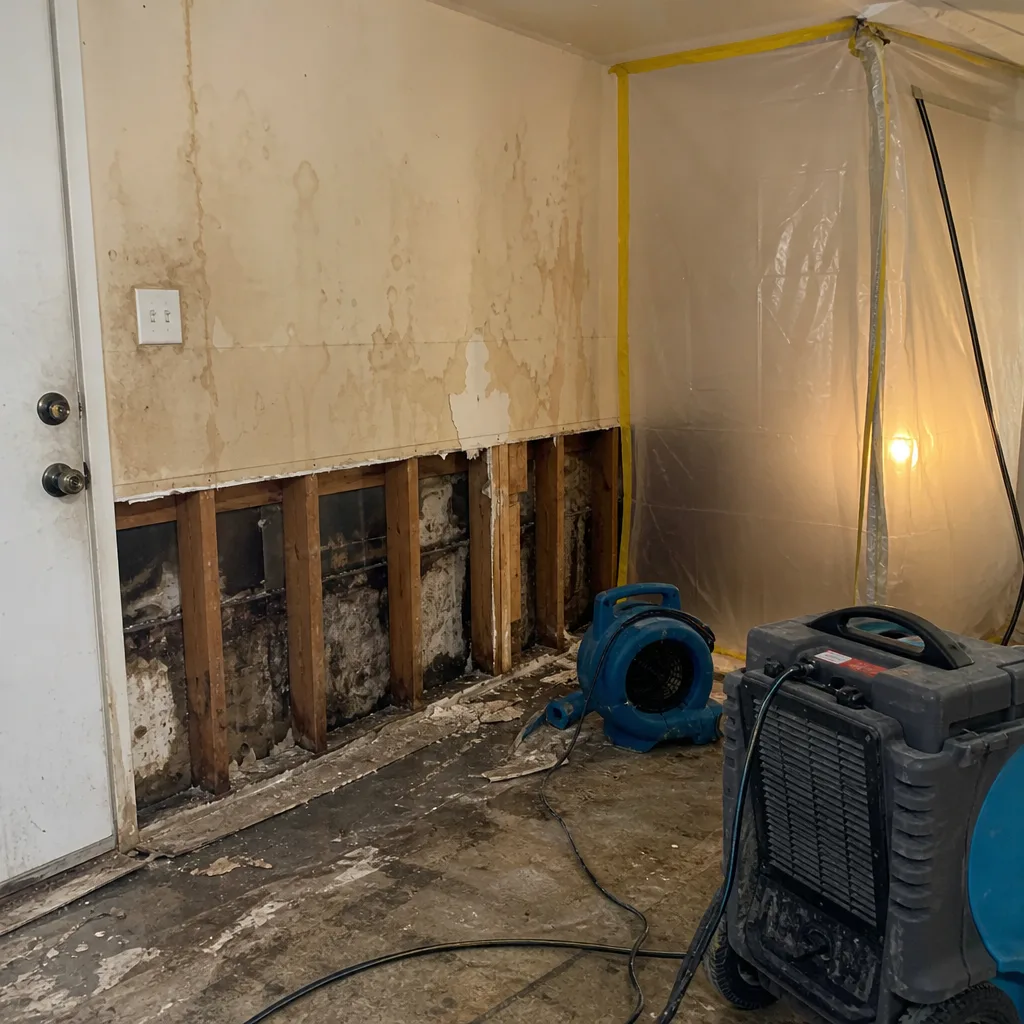 Before
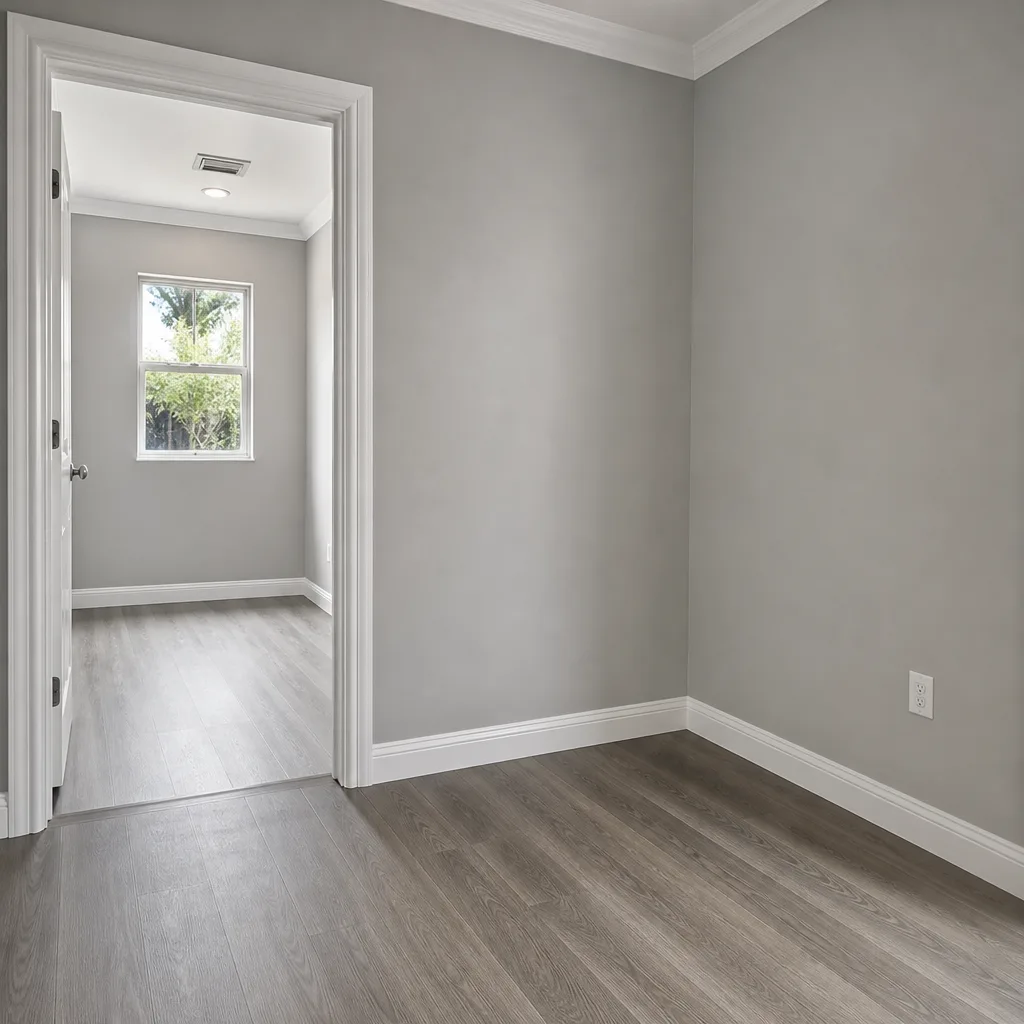 After
After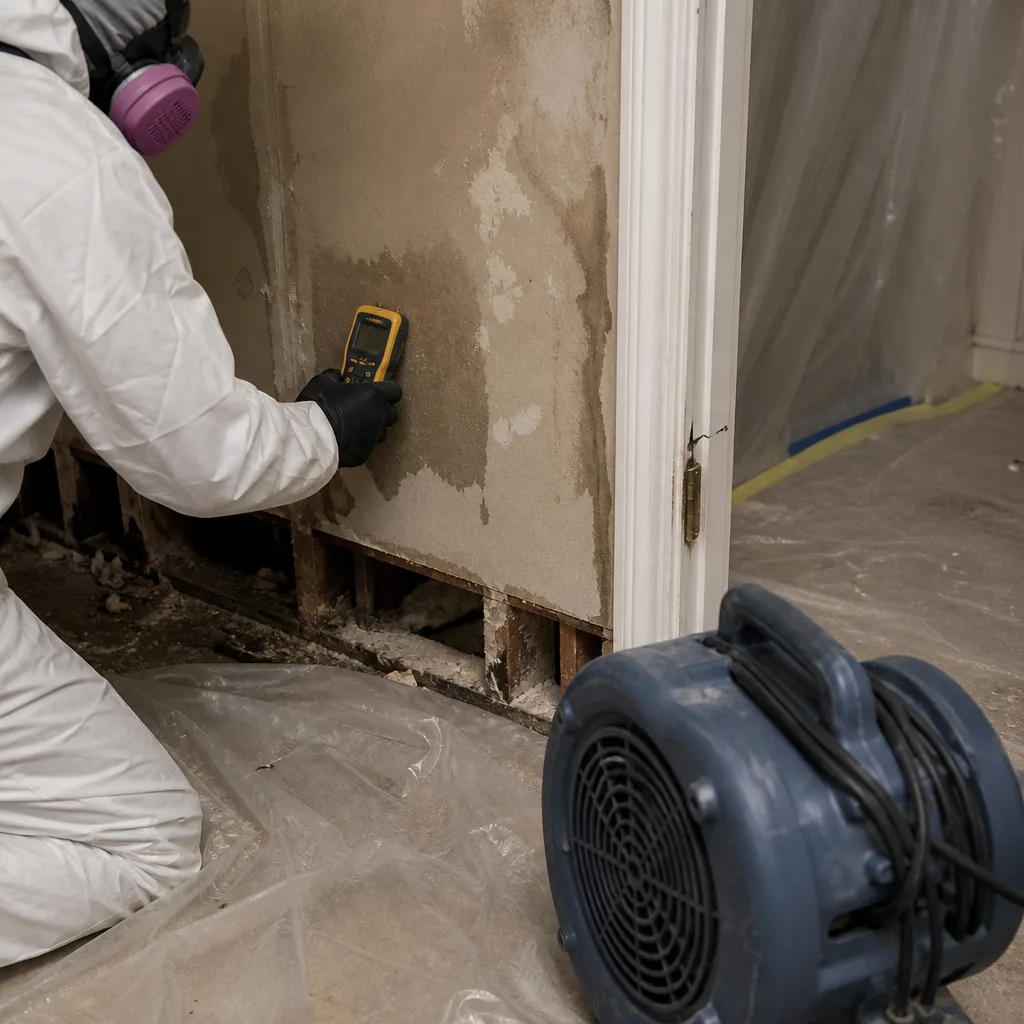 Before
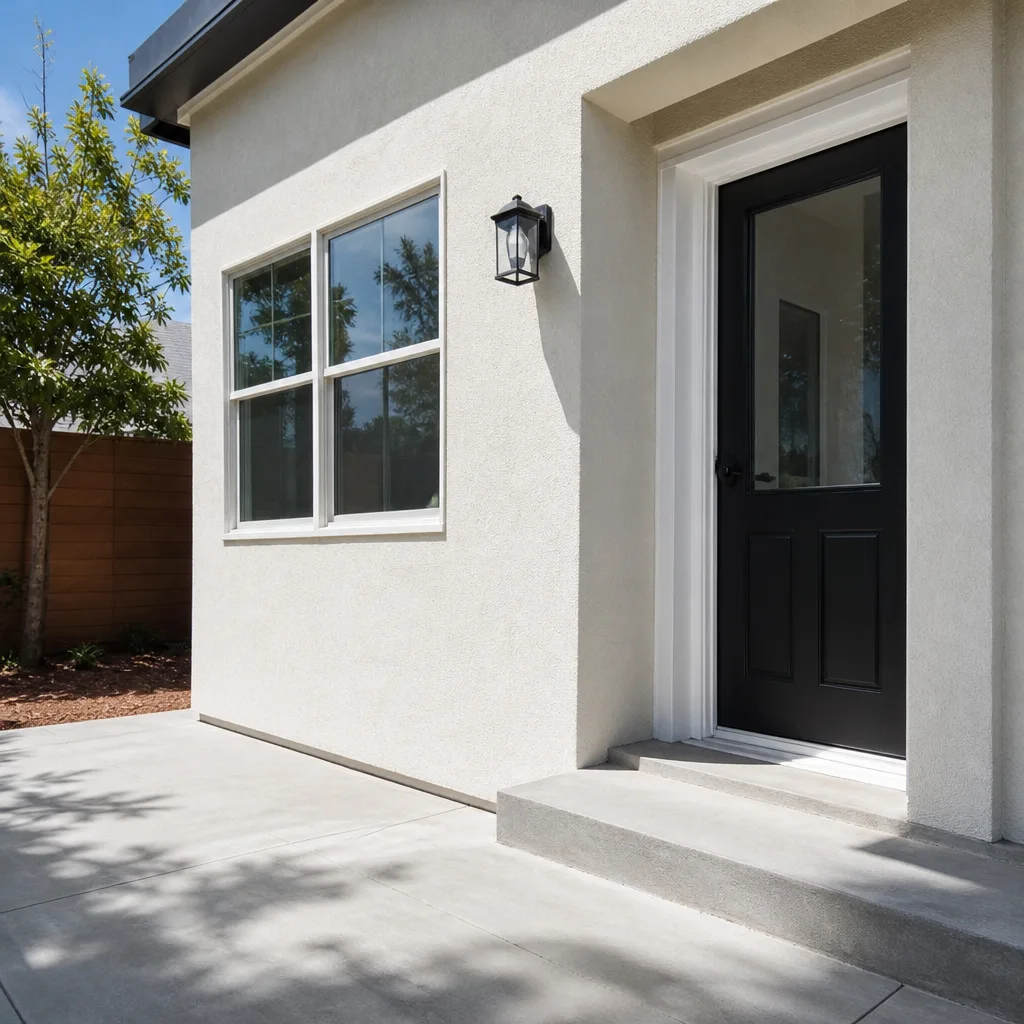 After
After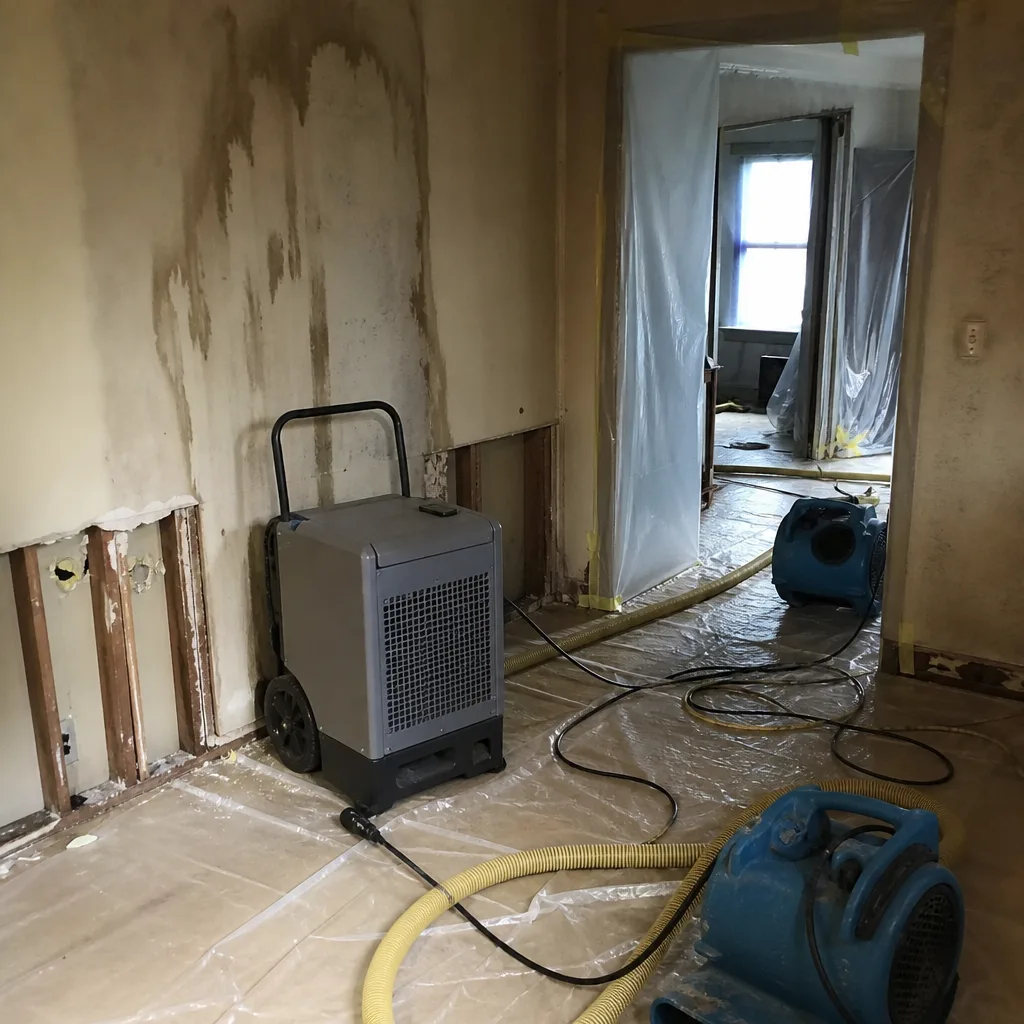 Before
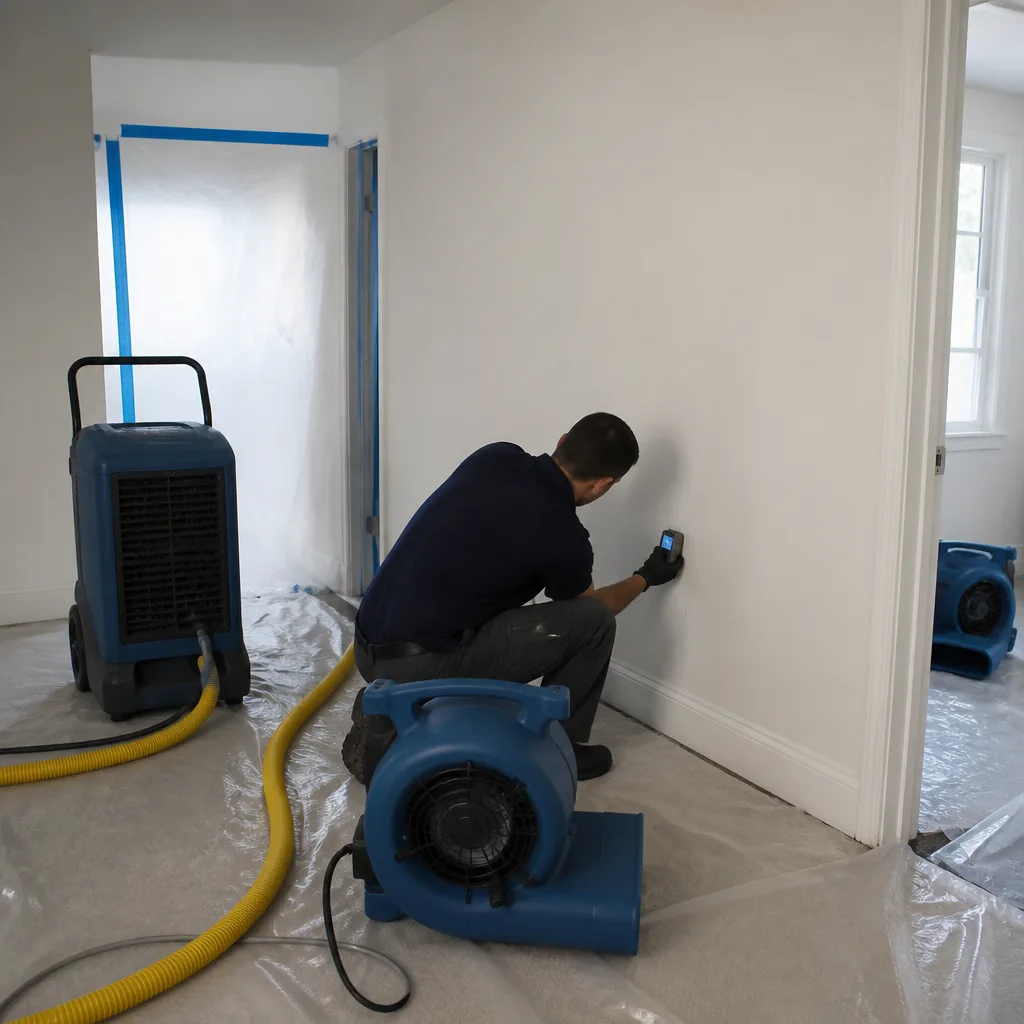 After
AfterKey Takeaways
- Los Angeles water damage restoration runs $3.50 to $8.50 per square foot for mitigation, with full restoration ranging from $8,000 to $25,000 for typical single-room events.
- The IICRC water category and class set the price floor before any equipment is deployed. Learn to identify your category before a contractor classifies it for you.
- The drying day multiplier is the largest single cost lever. A three-day dry versus a six-day dry changes your equipment line items by $900 to $1,800 on the same room.
- Demand a psychrometric log. If your contractor can’t show daily moisture readings that justify equipment run time, you’re being billed for days you don’t need.
- Los Angeles adds unique cost layers: union labor zones on the Westside, permit requirements for structural rebuild, and asbestos testing on pre-1980 homes.
- Learn to read a Xactimate estimate. Duplicate line items and inflated drying days are the two most common billing patterns that inflate a final invoice.
- Never sign an estimate you don’t understand, and never pay a final invoice that doesn’t match the written price you approved.
Common Mistakes to Avoid
- Accepting a per-square-foot price without a line-item breakdown. Per-square-foot pricing hides labor, equipment, and material assumptions. Demand the unbundled version. If a contractor won’t provide it, that’s a signal.
- Ignoring the water category classification. Once you sign an estimate that classifies your clean-water leak as Category 2, you’ve accepted the higher price and the more aggressive scope. Classify it yourself first.
- Paying for drying days without seeing moisture readings. A contractor who runs equipment for six days and can’t produce a psychrometric log is either disorganized or billing you for days that weren’t needed. Neither is acceptable.
- Letting a contractor skip asbestos testing on a pre-1980 Los Angeles home. This saves money on the front end and creates a health and liability disaster on the back end. Testing is state-mandated. Don’t waive it.
- Signing a rebuild estimate that was scoped over the phone. Rebuild is construction. It requires a written scope with material allowances, timeline, and payment schedule. A phone number and a handshake is not a rebuild contract.
- Assuming your insurance adjuster and your contractor are always aligned. They often are not. Your contractor works for you. Your adjuster works for the carrier. That’s a healthy tension. A contractor who hands you a Xactimate estimate and says “your insurance will cover all of this” without reviewing your specific policy wording is guessing.
- Waiting to call. In Los Angeles, water damage that sits for 48 hours becomes mold. Mold changes the category, the scope, and the price. The fastest way to keep a restoration job cheap is to start it immediately.
When to Call a Professional
If you’re reading this guide because a pipe burst, a water heater failed, or a toilet backed up, you’re already in the window where professional help matters. Here are the specific situations where DIY drying is not enough and professional restoration is required in Los Angeles. For a deeper comparison, see DIY vs Professional Damage Restoration: The Los Angeles Homeowner’s Decision Guide.
You have water in wall cavities or under flooring. Water that penetrates beyond the surface needs professional extraction and drying because the structure itself is wet, and surface drying won’t reach it. You have Category 2 or Category 3 water. Contaminated water requires antimicrobial treatment and proper disposal protocols. You see mold or smell a musty odor. Mold means the damage has been there longer than you think, and remediation is a different scope from drying. The water source is a slab leak, which is common in Los Angeles foundations, and the water has wicked up through the concrete. That’s a structural drying situation that requires specialty equipment. Your insurance claim is involved. Insurance work demands documentation, and a professional restoration company in Los Angeles knows how to document it so your claim is fully supported.
Wendell Restoration Los Angeles offers free estimates in Los Angeles. Call (213) 349-9500 and a live person answers, day or night. We’ll put the price in writing before any work starts, with a live arrival time you can track and before-and-after photos sent by text.
Frequently Asked Questions
Water damage restoration in Los Angeles runs $3.50 to $8.50 per square foot for mitigation, meaning extraction, drying, and antimicrobial treatment. A 400-square-foot single-room water event typically costs $1,400 to $3,400 for mitigation alone. Full restoration including drywall replacement, flooring, and paint runs $8,000 to $25,000. Call (213) 349-9500 for a free estimate with the price in writing before any work starts.
Answer time depends on the company. Wendell Restoration Los Angeles answers every call with a live person 24/7 and dispatches background-checked, uniformed technicians with a live arrival time you can track on your phone like a rideshare. In Los Angeles, most of our emergency calls get a technician on site within two to four hours, depending on your neighborhood and traffic.
Most Los Angeles homeowners policies cover sudden and accidental water damage, such as a burst pipe or failed water heater, but exclude gradual leaks, seepage, and flood damage unless you carry separate flood insurance. Your specific policy language matters more than any general rule. We document every job with before-and-after photos and coordinate directly with your adjuster so the claim reflects the actual work done.
That depends on the water category and the extent of absorption. A small Category 1 leak that was extracted same day may need only extraction and drying. Water that sat more than 48 hours, or that came from a contaminated source, requires full remediation including material removal and antimicrobial treatment. A contractor who recommends full remediation should show you the moisture readings and water classification that justify the scope.
In a typical Los Angeles restoration claim, your contractor and your adjuster communicate directly, but you are the point of contact for final approval. Wendell Restoration Los Angeles documents every job with before-and-after photos, provides written scope and pricing, and communicates with your adjuster on your behalf. You should never feel like you’re translating between two parties who won’t talk to each other.
Three checks: demand a psychrometric log showing daily moisture readings, ask for a line-item Xactimate estimate instead of a per-square-foot number, and require a written price before work starts. If any of those three are missing, get a second opinion. Wendell Restoration Los Angeles provides all three as standard practice.
The Bottom Line
Damage restoration pricing in Los Angeles only looks opaque. Once you understand the mechanics, the IICRC categories and classes, the drying day multiplier, the labor realities, the antimicrobial logic, and how to read a Xactimate estimate, you can evaluate any contractor’s number with confidence. The homeowner who asks for a line-item breakdown, demands moisture logs, and gets the price in writing before work starts is the homeowner who doesn’t get overbilled. Explore more guides & resources to protect your home and your budget. Los Angeles is one of the most expensive restoration markets in the country, and the difference between a $4,000 job and an $8,000 job on the same room is almost always the drying day count and the water category classification. Control those two variables, and you control the invoice.
Ready to get started? Call (213) 349-9500 for a free estimate, or explore our Wendell Restoration Los Angeles home page to see how our process works. Every estimate comes with a written price before any work begins, a written guarantee on every repair, and a free second visit if the repair fails. That’s the 365-Day Done Right Promise, and it’s in writing on every single job we do.
Written by Blake Sorensen, Owner at Wendell Restoration Los Angeles, serving Los Angeles since 2006.